Wednesday Bible Blurb Coffee Cup Theology 11 4 2026
Gathering at the local diner for a cup of coffee and conversation about current events used to be a common occurrence in America before the internet took over. The discussion often revolved around politics, crop prices and sometimes the weather. Coffee cup conversations are usually a mix of opinions, not always based on facts but the discussions were lively and fun. Not all the conclusions about politics, crops and the weather were correct. In my former world of financial planning, we used to talk about folks who were coffee cup financial advisors. The local “expert” had no training in the financial world but would give their opinion on investing as if they really knew what they were talking about. More often than not, they were incorrect, but they sounded so sure of themselves.
In the world of biblical theology there are many coffee cup theologians. They are the local expert on the Bible even though they have had no formal training in theology. They are always completely sure of their private interpretation of the Bible. They are often incorrect, but they sound so sure of themselves that they must be correct. How sure are we of our theology? Are our personal theological beliefs based on our preconceived cultural and theological bias, or on a very deep inquisitive study of the Word of God? What kind of theologian are you?
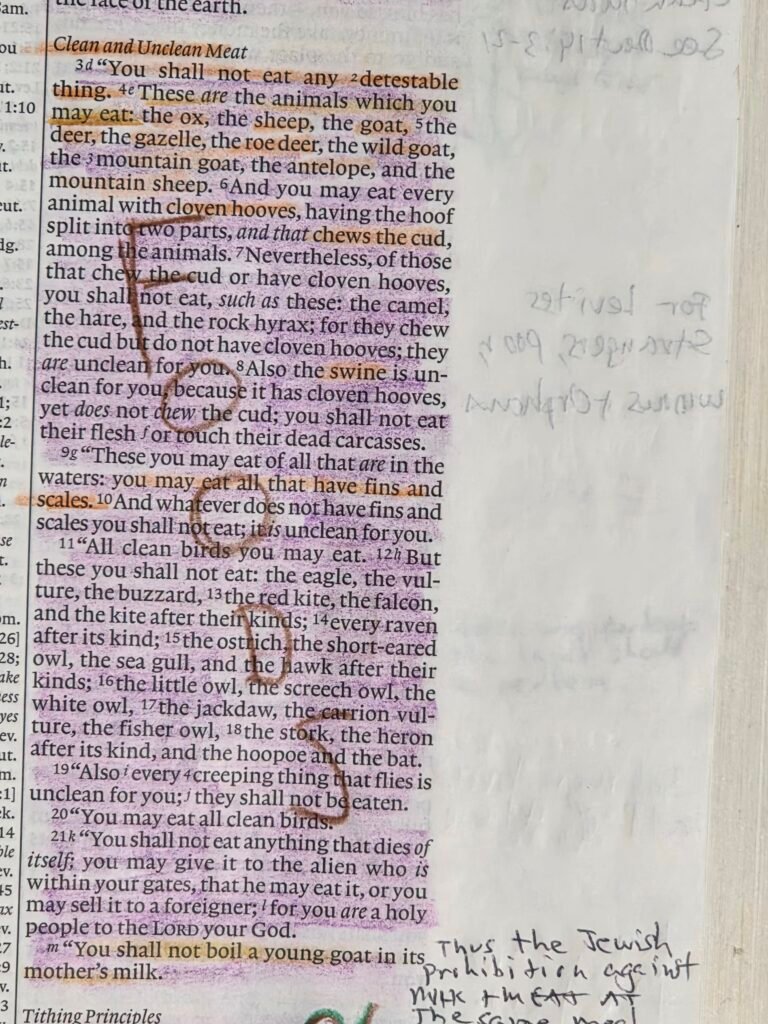
Recently I saw a Face Book post showing a picture of Deuteronomy 14:3-10. Along with Leviticus 11, this is where God explicitly tells mankind what to eat and what not to eat. God is very clear on what to eat when it comes to certain foods.* Most of the world completely ignores these verses and eats whatever they choose to eat. I guess as coffee cup theologians they know more about what food is good for us than God does. On the Face Book post there was only one reply, “Matthew 15:11”. No comment, just a verse trying to correct the belief of the original Face Book post. The response was meant to mean one can now eat anything they want. This is an example of coffee cup theology. One of the most important rules of hermeneutical theological study is passages must be interpreted historically, grammatically, and contextually. Context matters. Simply giving a verse out of context is very poor (coffee cup) theology. Satan used the out of context Bible quoting to tempt Jesus in Matthew 4. The context of Matthew 15:11 is about the disciples transgressing the tradition of the elders for not washing their hands before they eat (Matt. 15:1-2). Eating with unwashed hands does not defile a man. What comes out of our mouth from the heart is what defiles a man. (Matt. 15:18-20). The verse is not about eating clean or unclean meats. Coffee Cup Theology.
Do we take our personal theological bias into our study of the Bible? Or do we allow God to guide and teach us as we study? The apostle Peter said, “…but grow in the grace and knowledge of our Lord and Savior Jesus Christ.” (II Pet. 3:18 [NKJV]). By holding on to our preconceived theological bias we are not allowing ourselves to grow. Often, in our personal coffee cup theology we think we already know the Bible and do not delve deeply into scripture as we should. We are biblical know it all’s and have no need of spiritual growth. We accept the bias of Christmas, Easter, Halloween, Sunday sabbath without any deep study of the Bible even though they are the antithesis of scripture.
How then should we study the Bible? Do we take the time to study the culture the scripture was written in? What of history, language, translations, do we delve into these areas and use critical thinking? I propose two areas of help for all of us budding theologians:
- Read the article Hermeneutics: How to Study the Bible – COSCOG7 – Colorado Springs Church of God 7th Day. This brief description of how to study the Bible will give you a good foundation for your studies.
- Take the Artios Course Biblical Interpretation. Check out Artios Christian College at www.Artioscollege.org.
Hopefully in the future we can all gather at the local diner and drink coffee together as we study the Word of God. Let us move beyond “Coffee cup theology” and really dig into the Word of God.
- Note: The official doctrine of the Church of God (Seventh) Day is to adhere to the dietary food laws as outlined in Leviticus 11 and Deuteronomy 14.
Mike Wallace, Theologian