Barnabas the Apostle
Edited December 2025
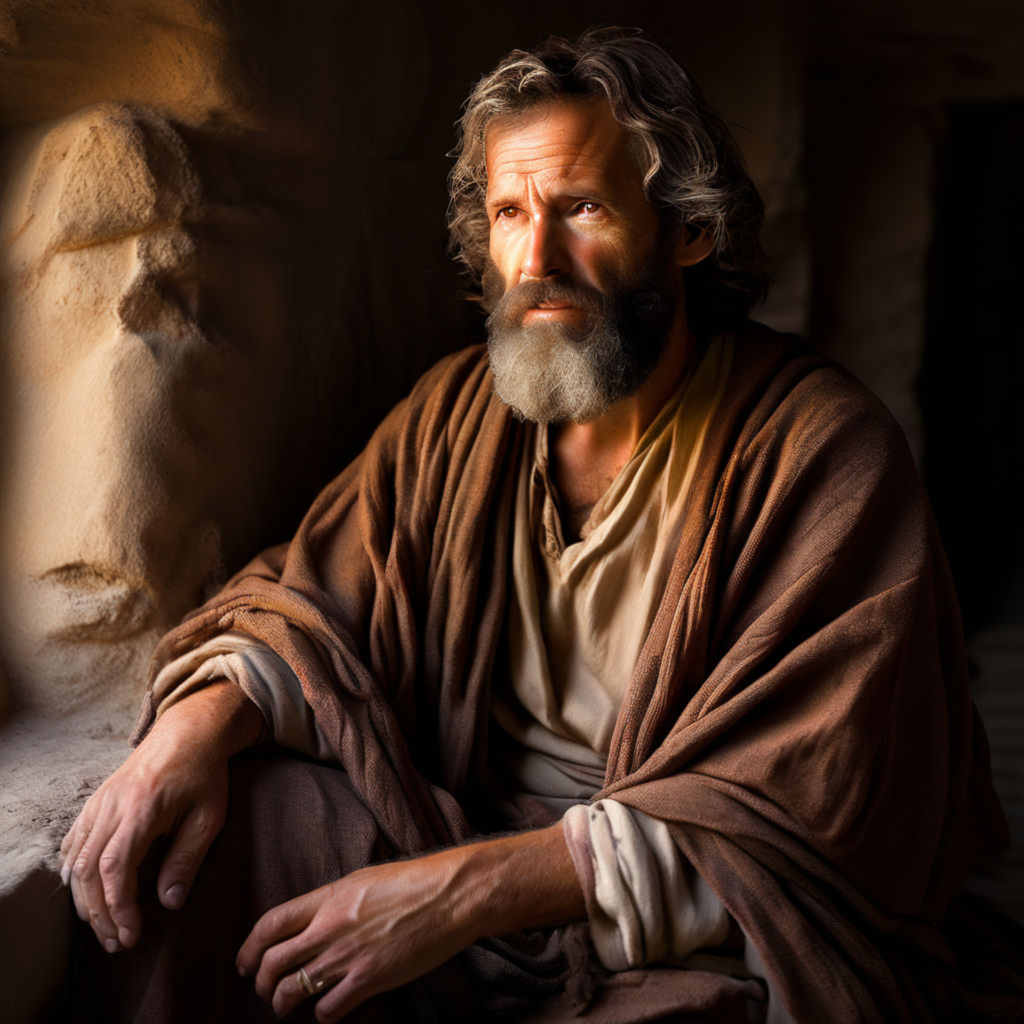
There are some individuals in Biblical history worth taking a deeper look into. Barnabas the apostle is one of those unique Christians who was of such high character and good report that we should study and emulate him. His life and works as a Christian are nothing short of miraculous and encouraging. He was an early convert to Christianity from Judaism. He was a prophet and an apostle, and he “sought out” Saul to ask him to work with him. He was a major voice at the Acts 15 Jerusalem council, a reconciler of people and an encourager and friend of the apostles. The terms humble, kind and generous just begin to touch the surface of who and what all this quiet apostle and prophet of God was. Barnabas inspired the first century church in the ways of grace and forgiveness. He was generous and completely trusted by the first Century Church of God and its leadership, the apostles.
C 31 A.D.[1]
A tremendous event had rocked all of Israel. Jesus had been crucified, killed by the leaders of ruling government of Judaism and Rome. Then his body disappeared, and it was reported he had been seen, first by women, then by his disciples and then by up to 500 people. Not long after, Peter and John were thrown into prison by the government establishment and threatened for teaching Jesus and His resurrection. The authorities were attempting to intervene in the situation because just weeks after the death of Jesus 3,000 Jews in Jerusalem were converted to this new “sect of Judaism” (Acts 2:41). Then almost as quickly 5,000 more believed the man killed by the government was alive. 8,000 people in total were causing a stir, and more were being added daily (Acts 2:47). They must be silenced, or things would get out of hand and Rome would have to step in. The priests, and the Sadducees (ruling class of Judea at that time) threw the apostles Peter and John into what was likely the same prison complex Jesus was held in. The movement must be crushed. The people must be crushed. The doctrine must be crushed. Yet the church grew daily.
This situation of extreme government persecution against the new belief is when we first meet Barnabas. We learn much of the man and his character in Acts 4:36-37, “And Joses, who by the apostles was surnamed Barnabas, which is, being interpreted, The son of consolation, a Levite, and of the country of Cyprus. Having land, sold it, and brought the money, and laid it at the apostles’ feet.” [All scripture quotations are KJV unless otherwise noted.].
Barnabas was such a contrast to the young man who went to Jesus and asked him what he must do to inherit eternal life. In Matthew19:16-22 a young man is described as having many possessions. Jesus told him to sell them and give the money to the poor. “But when the young man heard that saying, he went away sorrowful: for he had great possessions.” The rich young man could not part with his personal worldly wealth to follow Jesus into eternal life. When Barnabas came to the apostles in Acts 4:36-37 and gave away his wealth and possessions the apostles must have been astonished. Here was a man named Joses (Soon to be renamed Barnabas) who did exactly as Jesus had asked the rich young man to do. All eleven of the apostles would have been with Jesus when the incident in Matthew 19 occurred. This was not many months prior to these events when rich Barnabas gave so willingly. The contrast of attitude between the rich young man and Barnabas would have stood out as a shining example to the apostles and to the new little church.
Right after Barnabas willingly gave his possessions to the apostles we read of the husband-and-wife team of Ananias and Sapphira in Acts 5:1-11. They also sold some possessions and then brought “part” of the money and laid it at the feet of the apostles. They held back part of the proceeds of their gift and lied about it to Peter who simply pronounced them dead in Acts 5: 1-11. We again see the character of Barnabas as he gave ALL and did not hold back from the work of God. The rich young ruler could not part with any of his worldly possessions and Ananias and Sapphira held back to stay partly in the world and partly in the “Way.” With God it is all or nothing. Barnabas chose to do the “all”.
Joses is the Greek form of the name Joseph.
Joses, later called Barnabas was from Cyprus but apparently had been in Jerusalem for the Passover and Pentecost season and to see his relatives. He is therefore one of the very first converts to Christianity. Being a landowner, he was a man of wealth and as a Levite possibly of high estate in society. He was likely very versed in the Torah and being from Cyprus he was a “Hellenized” Jew, meaning he spoke Greek and read the Septuagint (Greek translation of the Old Testament). Even his name Joses was Greek. He was called Joses instead of the Hebrew Joseph.
How did a Jew end up living on the Island of Cyprus in the Mediterranean Sea? What was so special about Cyprus that it is mentioned in the Bible? When the Persians allowed the Jews to begin to return to their ancestral homeland (Judea) some of the Jews went elsewhere. Not all returned to Judea; some stayed in Persia and others migrated around the Mediterranean Sea. Cyprus, being a strategic island in the eastern Mediterranean repeatedly fell under differing powers. Assyria, Persian, The Phoenicians, Alexander the Great, Egypt and finally Rome took their turns of conquering and ruling this most important strategically placed military and trade route island. Commerce and trade would have flourished and would attract businessmen and traders to the island. After the Death of Alexander, the Great, Cyprus became a part of the Greek Ptolemaic empire. Greek now became the chief language and culture of this island nation. Those who lived there, including any Jews like Barnabas, would have been Greek speaking individuals.
The religious history of Cyprus is important to Barnabas and his future Christian religious life. As a future apostle, his youth and memories of growing up on and learning the way of the Greek world in Cyprus would greatly benefit his travels with Paul. The ancient pagan goddess Aphrodite was the chief god of the island. Barnabas’s dealings with the island’s history, commerce, language and religion would stand him in good stead in his later career as an apostle of Jesus Christ.
Aphrodite was the goddess of fertility and love. Her temples would have had “temple prostitutes” and all the sins of paganism went in to worshipping her. The Romans called Aphrodite, “Venus”, the goddess of love, beauty and fertility. She was also a protector of sailors on the seas and with Cyprus being an island this “god” Aphrodite fit very well. What better goddess could Cyprus have? A god who protected the sailors on the seas and provided the same sailors with temple prostitutes (for a price of course). This is the world of Barnabas on Cyprus. As a Levitical Jew, a businessman of some means and wealth he lived in what was a type of Sodom and Gomorrah. He apparently kept his Judaism intact, did not worship the false goddess and yet he did well economically in the society. In his travels with Paul, the knowledge of Barnabas and this Greek world of paganism would be helpful on more than one occasion.
What was Cyprus to the Roman world? Captured by the Romans in 58 B.C. and “after 22 B.C., a senatorial province”[2] A senatorial province was one not considered in rebellion by Rome and thus the Senate ruled the land. It would have been ruled by someone of senatorial rank who would act as governor and report back to the Senate in Rome. The Romans, always wanting to tax and bring the spoils of war back to Rome would have been interested in the wealth of the land and who the wealthy were. It is therefore most logical Barnabas was a known figure to the governor of Cyprus. As a wealthy landowning business individual Barnabas would have had contact with the governor of Cyprus. This is no different than today as the wealthy business class of countries have contact with the powers that be, governors, senators, congressmen etc.
A Levite was someone who was a descendant from Levi, the third son of Jacob and Leah. Levites provided assistance to the priests in the Jewish temple. Originally a landless tribe they remained loyal to David and Solomon and the tribe of Judah. When the Babylonians of 587 B.C. conquered and removed Judah from the land of Israel, the Levites were taken with them to Babylon. Once the Persians (who later conquered the Babylonians) released the Jews to return to their ancestral lands, the Levites returned with them. Not all went back and some became merchants, landowners and businesspeople remaining loyal to the systematic beliefs of the Judaism of the day. As a Levite Barnabas would have been well versed in Judaism’s laws and ceremonial laws.
This is the world of Barnabas. A loyal Jew, a Levite living in a foreign land yet prospering to wealth and landownership as a businessman who kept the law (Ten Commandments), rejected the paganism of Cyprus and its false goddess worship. He was “Hellenized” as he spoke and read Greek fluently. He was generous and yet apparently humble. He was at home in the world of the Greek or the Jew. He was the perfect future companion prepared in life to travel with Paul the apostle in the future.
How old was Barnabas when he became a Christian? The answer is not known but we do have some hints. He was old enough to have had the time to acquire land and wealth and to be the uncle of John Mark. He was most likely older than Paul as Barnabas was originally the leader of the first missionary journey of Barnabas and Paul (Acts 13:1-3). This position would have come about for several reasons 1) It was Barnabas who “sought out” Saul of Tarsus to be his aid in Antioch. 2) Barnabas was the senior pastor over Saul at Antioch. 3) It was Barnabas who vouched for Saul to the apostles in Jerusalem and 4) the culture of the day giving the preeminence to the elder person. These demographics point to Barnabas being at a minimum of five to ten years older than Saul and possibly more. His nephew, the young John Mark was able to travel with them on the first missionary journey. Barnabas would most likely be at least 40 plus years of age for his young nephew, John Mark, to be old enough to go along. Mary, sister of Barnabas, was old enough to have John Mark travel and assist his uncle.
As a very early convert to the new “Way” did Barnabas have relatives who were also converted? We have already seen he had a nephew by the name of John Mark. Some theologians say they were cousins, but most references say Barnabas was his uncle. John- Mark would eventually write the Gospel of Mark.
Mark began his ministry as an assistant to Uncle Barnabas on the first missionary journey of Barnabas and Saul. After Cyprus, Mark apparently decided to return to his family in Jerusalem. Was he young, inexperienced, scared to go to Asia or upset Paul had become leader over Uncle Barnabas? We do not know the answers as to why he returned to Jerusalem. Later he would be the cause of a great “employee” human resources type of disagreement between Barnabas and Paul.
Mark was young, inexperienced and apparently from a well-to-do family in Jerusalem. We find in Acts 12:12 that after his miraculous escape from the prison of Herod, Peter went to the house of Mary, the mother of John Mark. This is a significant point as home ownership in Jerusalem would not have been inexpensive. This Mary, friend of the Apostles was the sister of Barnabas. Indications are this home was a house church or a type of headquarters for the early church.[3] Mary and Mark were extremely early converts to the new religion along with Barnabas. Both sides of the family (Mary and Barnabas) seem to have had some wealth and therefore the possibility of them having inherited wealth is real. Either way, they were generous to the apostles in their giving and service to the church.
There is no indication as to whether Barnabas was married or single. The written record concentrates on his accomplishments and not on any family life he may or may not have had. We do see a pattern of love and kindness in Barnabas which was recognized by the apostles who eventually changed his name from the Greek Joses to another Greek name, Barnabas.
What’s in a name?
Joses was a Greek name for the Hebrew name Joseph and meant “he will add.”[4] An apt name for someone who would add so much in so many ways to the Church of God.
Joses was given the name Barnabas by the original apostles in Acts 4:36. This was very early in the history of the Christian church and shows how much of an impression Joses, now named Barnabas, had on the early apostles. His name in the Greek can be rendered as “son of consolation” or as “son of exhortation”. His name in the Aramaic “suggests such comfort as is given by encouraging rather than rousing words”[5]. Strong’s # 921 simply calls him, “son of comfort”. “All we hear of Barnabas points to goodness of heart (“a good man”) as his distinctive quality, giving fineness of perception and large insight into essentials”[6].
We often think of the name change of Saul to Paul. Quietly, because he becomes somewhat lost in history after Paul becomes the leading apostle to the Gentiles, Joses becomes Barnabas at the behest of the original apostles. While there are varying translations and possible meanings of Barnabas, we have already seen four and they all point to a great man of God.
“Son of Consolation”, meaning one who gives comfort and consoles those who have lost a loved one. Providing comfort to one who has suffered or is suffering. An encourager after a loss or a disappointment.
“Son of exhortation”, in both speaking and communicating the ability to be emphatic in urging someone to do something.
“Encouraging”, One who gives confidence and support, is positive and gives hope for the future.
“Comfort”, Someone who gives physical ease and freedom from pain. The alleviation of a person’s feelings of grief or distress.
Barnabas was another Greek name.[7] Why did the Jewish apostles give Barnabas, a Levite a new Greek name? 1) He was a Hellenized Jew who spoke Greek and lived on the Greek island of Cyprus. 2) He would soon to travel to and evangelize the Greek world with Paul. The new chosen name of Barnabas was not given accidently. Not only did the meaning of Barnabas fit his personality but it bolstered him on his soon coming mission to the Gentile world.
What a name to live up to! Can we imagine a man of such character and generous goodwill? Was Paul using Barnabas as an example of what a bishop should be in I Timothy 3:1-7? Barnabas was Paul’s senior and mentor in Paul’s early ministry. The description Paul gives of a bishop (elder in the Church of God) fits Barnabas to a tee. Paul repeats himself in Titus 1:7-9 “For a bishop must be blameless, as the steward of God; not self-willed, not soon angry, not given to wine, no striker, not given to filthy lucre; But a lover of hospitality, a lover of good men, sober, just, holy, temperate; Holding fast the faithful word as he hath been taught, that he may be able by sound doctrine both to exhort and to convince the gainsayers.” Barnabas was all of these.
What’s in a name? Much indeed!
What’s in a title?
Barnabas was an apostle. Acts 14:4,14 Barnabas and Paul both were elevated to the position of apostle. A very rare act as we only find a few mentioned in the New Testament after the original eleven. One of the main meanings of the word “apostle” is one sent forth or “one sent with a special message or commission.”[8]
Strong’s #652 Gr. “’Apostolos’, apostle, representative, messenger, envoy; often used in a technical sense for the divinely appointed founders of the church-apostles, he that is sent, messengers, messengers.” Barnabas and Paul were both “sent forth” to preach the gospel.
Barnabas was a Prophet. Acts 13:1 Strong’s #4396 Gr. “’prophetess’, prophet, one who speaks inspired utterances; the writings of the OT prophets; Strong’s #4396 Gr. “‘propheteia’, prophecy, an inspired message, sometimes encouraging obedience to God, sometimes proclaiming the future as a warning to preparedness and continued obedience-prophecy, prophecies, prophesying, prophesying’s.”
Barnabas was both an apostle and a prophet of God.
Barnabas is Greek from “Aram”, barnbuah, son of prophecy, especially as it is manifested in exhortation and comfort, the name given by the apostles to Joses (Acts 4:36), probably on account of his eminence ass a Christian teacher.”[9] We now see even the name of Barnabas had a prophetic meaning as he was a prophet. Was this gift of prophecy something that was recognized early on by the apostles in Jerusalem?
With all of this background on Barnabas, his life, character and names we can now look deeper into his life and activities through the lens of history, culture and the scriptures.
In Acts 4:36-37 we discovered much about the man himself. A Levite from Cyprus, related to his sister Mary and John Mark (Acts 12:12), he sold his possessions and gave the money to the apostles. He was called early into the “Way” as it was first called, and he became a prophet and an apostle of the Christian Church.
We next encounter Barnabas in Acts 9:27 “But Barnabas took him, and brought him to the apostles…” Saul, the overzealous murdering Pharisee of the law had been breathing out threatening’s and slaughter against the Church. Saul had consented on the murder of Stephen the Deacon, and he had been entering into the homes of the brethren, pulling them out and having them incarcerated. While on the road to Damascus where he was to continue his persecutions, God struck Saul blind and called him into the church. No one believed it or wanted to believe it. Now Barnabas, the son of consolation brought Saul to the apostles in Jerusalem and vouched for his miraculous conversion in about 35-38 A.D.
This example of the character of Barnabas and the respect the apostles had for him speaks volumes. Saul was called by God and befriended by Barnabas only a few years after the crucifixion of Jesus. The man who had been the chief persecutor and murderer of the new church was now a part of the church and his mentor was none other than Barnabas. The relationship of Barnabas, the mentor to Saul, the student would grow over time.
After Saul had persecuted the church and killed Stephen many in Jerusalem fled around the eastern edges of the Roman Empire. Those who fled spread the gospel and encountered the Grecians and many Greeks (Gentiles) who began to believe on the Lord (Acts 11:19-21). Peter had recently rehearsed his dealings with the centurion Cornelius to the church leadership in Jerusalem (Acts 10-11) and it was decided to send Barnabas to Antioch to take charge of and teach the new believers (Acts 11:22). Who better to help and teach new Greek converts than the Levite Cyprian Greek speaking elder Barnabas? He was uniquely suited to the mission at hand. Humility was another trait of Barnabas and “he was a good man, and full of the Holy Spirit and of faith: and much people was added unto the Lord” (Acts 11:24).
Very quickly after going to Antioch, Barnabas went to Tarsus to seek out Saul (Acts 11:25). Saul returned to Antioch with his elder mentor and friend Barnabas and together they began a relationship of preaching the gospel that would eventually change the world. Together, Barnabas and Saul grew the church, and it was at Antioch, under the pastorship of Barnabas that the “disciples were called Christians first” (Acts 11:25-26).
With the growth of the Greek speaking gentiles adding to the now “Christian” church of Antioch what more could be done to spread the gospel? Barnabas was now firmly established as the older mentor and encourager of the young Saul.
C 41-44 A.D.
Acts 11:30 Barnabas and Saul are dispatched to Jerusalem to send relief funds to the church from the drought and famine. Once again Barnabas is entrusted to carry and deliver funds to the church. This time his young protégé Saul is along and we will later find Saul/Paul repeating the delivery of relief funds to the Christians of Jerusalem throughout his missionary.
Herod Agrippa I, the King of Judea (41-44 A.D.) killed the apostle James, the brother of John and imprisoned Peter during the days of Unleavened Bread in Jerusalem. Turmoil and fear must have enveloped the church in Jerusalem during this persecution. An angel releases Peter from prison, and he goes directly to the home of Mary the mother of John, whose surname was Mark (Acts 12:12). Peter goes directly to Mary, who is the sister of Barnabas. Barnabas and Saul were there in Jerusalem at this time as they had just completed their delivery of the famine relief. What better place for Barnabas to stay while in Jerusalem than with his sister and nephew. Barnabas and Saul were by then close to the original apostles and to Peter. God then has an angel put an end to the evil Herod Agrippa (Acts 12:21-23). After these horrifying events (Death of James the brother of John) and remarkable freedom from prison for Peter, Barnabas and Saul, having fulfilled their mission return to Antioch with young John Mark, nephew of Barnabas (Acts 12:25).
Barnabas and Saul were in Jerusalem when James the brother of John was murdered by Herod Agrippa. Saul must have felt some sense of remorse as he had previously been the inflictor of torments on the young Church of God. Fortunately for Saul he had his mentor Barnabas there to remind him of his work ahead and to console him of his sorrows.
The remarkable fantastic missionary journeys of Barnabas and Saul are about to begin. After many years of training and spiritual growth for both Barnabas and Saul they are now to go forth to the world of the Roman Empire and preach the gospel of the coming Kingdom of God. In the Roman Empire ANY dissension, any “false religion” by the Roman standards which does not worship the emperor had only one fate-death. The emperor was god and no false god or proclamation of a false god could or would be tolerated by the Roman authorities. This would be an extremely dangerous mission.
C 46 A.D.
Acts 13:1-3 the Holy Spirit separated Barnabas and Saul for the “work whereunto I have called them.” Both men, Jewish Christians speaking Greek, Aramaic and Hebrew, selected and trained by God for a mission to the world of Rome. Barnabas, a Hellenized Jew at home in the world of the Greeks or the Jews. Saul, likely half Jewish, a citizen of Rome, raised a Pharisee and taught at the feet of Gamliel, a prosecutor of the church, a doctor of the law, miraculously converted on the road to Damascus and mentored by Barnabas are about to set out on a mission so very dangerous. One mis-speak to a Roman official could result in immediate death for both men as only the emperor was considered God in the Roman Empire. Who is this Jesus raised from the dead to bring about a new Kingdom of God to replace all other kingdoms, including the Roman Empire?
Where to go to test the waters of the preaching of this new gospel of Jesus Christ? Cyprus of course, the home of Barnabas. The history and experiences of Barnabas the leader helps them know where to start their first missionary journey. Cyprus, a land ruled by Rome, Greek speaking and pagan worshipping. What better place could these two preachers of the Kingdom of God go? A positive result would be helpful and encouraging as they started their first missionary journey.
On the Island of Cyprus lived a very remarkable man by the name of Sergius Paulus, a man of prudence. Who was this man? None other than the leader of Cyprus for the Roman Empire. As Cyprus was a Senatorial Province, Sergius Paulus would himself have been a Roman Senator who was the governor of Cyprus. This is the great first test of the preaching of the Gospel of the Kingdom of God to the world of Rome after leaving Antioch- preaching and teaching to a Roman Senator who had the power and authority to kill anyone who did not worship the emperor.
The entire remarkable encounter with Sergius Paulus is found in Acts 13:4-13. In this, their first encounter of the missionary trip they ran into trouble right away. Barnabas and Saul are invited to speak to the Pro-consul, but a sorcerer withstood them in front of the governor, Sergius Paulus. Saul begins to be called Paul on Cyprus and starts to assert some authority. Paul “set his eyes on him, (the sorcerer) and said, O full of all subtility and all mischief, thou child of the devil, thou enemy of all righteousness, wilt thou not cease to pervert the right ways of the Lord? And now behold, the hand of the Lord is upon thee, and thou shalt be blind, not seeing the sun for a season. And immediately there fell on him a mist and a darkness; and he went about seeking some to lead him by the hand (Acts 13:9-11). “Then the deputy, when he saw what was done, believed, being astonished at the doctrine of the Lord” Acts 13:12. A Roman Senator, converted, not at the miracle (I am sure it helped) but by the “doctrine of the Lord.”
We learn much from this first missionary encounter. 1) Saul, now called Paul, begins to take the lead from his elder mentor Barnabas. 2) Saul can perform miracles. 3) The Roman Senator Sergius Paulus is converted to Christianity which was a miracle and a possible/probable career ender for him. 4) Something happens to the very young John Mark, nephew of Barnabas as he up and leaves his uncle and Paul and goes back to Jerusalem. Was he upset Paul had taken the lead from Uncle Barnabas? Was he scared off by the possibility of going on to Asia to preach the gospel in the middle of the Roman Empire? We will never know exactly why he left but as we will see his departure will cause a major problem in the future.
The results of the beginning of this first missionary journey are extraordinarily encouraging. Miracles happen, a senator is converted and the testing of the waters of preaching the new gospel of God’s Kingdom in the heart of the Roman Empire is a success! Except for the unfortunate departure of a young John Mark, it could not have started out any better. Barnabas on his home turf preaching to the Roman Governor! What tremendous POWER in the gospel must have been preached!
Now Paul and Barnabas (the order has been reversed) left Cyprus and moved on to Antioch in Pisidia and on the Sabbath Day Paul (Not Barnabas) preached a sermon on history and Jesus Christ and the gospel of the kingdom of God. Acts 13: 42-44,46,50 Paul and Barnabas were asked by the gentiles to come back the next Sabbath day to teach more of the new way. It should be noted that Gentiles were asking for Paul and Barnabas to come back the next Sabbath Day. The Gentiles are NOT Sabbath keepers, therefore these Gentiles knew about the Sabbath day and wanted to learn more on the next Sabbath.
Acts 13:46 “Paul and Barnabas waxed bold…” After the next Sabbath Day in Antioch of Pisidia, the Gentiles believed the gospel and the Jews stirred up trouble and expelled Paul and Barnabas out of the city. It is realized and revealed to the missionaries they must now go to the Gentiles (Acts 13:47). The calling and conversion of both Paul and Barnabas was a perfect match for the task at hand. Both were at home in the Greek world, yet both were at home in the Jewish world. No two people at that time could have done the job Paul and Barnabas were sent to do.
They were going off to convert the Greek speaking world of Gentiles in the Roman Empire to the salvation of Jesus Christ and His coming Kingdom of God.
After fleeing the city of Iconium from severe persecution Paul and Barnabas find themselves in Lystra and Derbe, cities of Lycaonia where they preached the gospel. Located in Southern Galatia (Southern Turkey of today) in the heart of the Greek speaking pagan worshiping world an amazing event happens. A man, impotent in his feet, unable to walk since birth is miraculously healed by Paul (Acts 14:10). What a stir this caused to the superstitious pagan peoples of the area. They lifted up their voices and shouted, “The gods are come down to us in the likeness of men. And they called Barnabas, Jupiter; and Paul, Mercurius, because he was the chief speaker. Then the priest of Jupiter, which was before their city, brought oxen and garlands unto the gates, and would have done sacrifice with the people. Which when the apostles Barnabas and Paul, heard of, they rent their clothes, and ran in among the people crying out… (Acts 14:11b-14).
Acts 14:14 is the first time Paul and Barnabas are called “apostles”.
Paul and Barnabas were sickened by the response of the people. They were not gods and immediately preached the gospel of Jesus Christ. Soon however, Jews of an evil nature came and persuaded the gentiles against Paul and Barnabas. Paul was stoned to death inside the city and then drug outside the city and dumped to rot. In what is an apparent resurrection and healing Paul rises up and walks back into the city. The very next day Paul and Barnabas depart to Derbe to further preach the gospel (Acts 14:19-20). Barnabas (Jupiter) must have been mortified at the stoning of Paul (Mercury) and amazed and overwhelmed by the life he received back. Barnabas forever the mentor and consoler of the people of God. In the King James version, the Roman names of Jupiter and Mercurius are used in Acts 14:12. In the New King James and the New International version the Greek names of Zeus and Hermes are used.
Who was Jupiter (Zeus) and who was Mercurius (Hermes)? We may see a hint in the life of Paul and Barnabas by the names of these gods given them by the citizens of Iconium.
They called Paul, Mercurius (Mercury) the Roman god of commerce, a mediator between god and mortals, a helper of people in giving goods and MESSAGES. Mercurius was sometimes known to be a prankster. Paul was the chief speaker on this occasion thus they called him Mercurius as he gave the message. What about the healing of the lame man? Did the people believe in the miracle or did some of the people think it was a prank? Seemingly both sides were present in the debate but for the most part they thought Paul was a god. However, we will soon see how fickle people can be.
They called Barnabas, Jupiter. This was an interesting and frightening choice of the gods to be named after for several reasons. The choice of name gives us a glimpse into the possible age difference between Paul and Barnabas. Jupiter was considered the supreme god portrayed as having a long white beard and being rather elderly. He was a protector of the empire. Described as: “Imperator, the supreme general; Jupiter Invictus, the unconquered; and lastly, Jupiter Triumphator” (internet definition). This must have truly frightened Barnabas to be called Jupiter. Why the fright? First Paul and Barnabas were offended at being worshipped as gods and knew how false the concept of “human” gods is. Secondly, by calling Barnabas “Jupiter” they were equating him with the Emperor of Rome who was considered god in the flesh in the place of Jupiter. What was the title of the Roman Emperor? The same as for Jupiter, “Imperator, the supreme general; Jupiter Invictus, the unconquered; and lastly, Jupiter Triumphator.” Barnabas could easily have been accused of usurping the authority of the emperor and an immediate death sentence was a distinct possibility.
This account in Lycaonia of being called gods shows us much of Paul and Barnabas. Barnabas the elder and Paul the younger, given names of gods to fit their ages and personalities. But how fickle were the people? Acts 14:19-20 they killed Paul by stoning him after being stirred up by Jews. It seems the “prankster” part of the people did not believe in miracles after all. Maybe the prankster in God kicked in as Paul rose from what they all thought was death and walked into the city.
Paul and Barnabas, now having completed their first mission, retraced their steps, comforted the brethren (Barnabas the comforter) and returned to Antioch where they abode a long time with the disciples.
C 48 to 49 A.D.
Success can sometimes have unintended consequences. So many unclean gentiles had been converted to Christianity that a dispute arose about whether the new converts should be circumcised and keep the law of Moses. It was decided to have a gathering of the apostles and elders in Jerusalem for a conference to consider the matter of the gentile converts (Acts 15:1-29). After much discussion and dispute in Antioch over the matter, Paul and Barnabas went to Jerusalem to consult with the “original” apostles and to make a decision on how to handle these newly converted Gentile Christians (Acts 15:2,22,25). Eventually Peter, the head apostle of the Church of God and James, the physical half-brother of Jesus and the Jerusalem apostle decided to put nothing in the way of the new converts. The new converts would not have to be circumcised or keep the “ritualistic” laws of the Old Covenant. They were however to abstain from the practices related to idolatry (Acts 15:20,29). The apostles Peter and James penned a letter to the gentile converts in which they said, “It seemed good unto us, being assembled with one accord, to send chosen men unto you with our beloved Barnabas and Paul” (Acts 15:25).
“Beloved” Barnabas and Paul. Barnabas was the elder, the first leader, the friend of the apostles. While Paul had become the leader of the missionary trip Barnabas was still held in the highest of esteem by the apostles who knew and walked with Jesus Christ. The apostles knew the history of both Barnabas and Paul and they loved them both. The history and respect for Barnabas must have gone a long way in the proceedings of the Acts 15 council in Jerusalem. It was Barnabas who had vouched for Saul. It was Barnabas who had taken Saul to Jerusalem so many years previously. It was Barnabas who had sought out Saul as his helper. It was Barnabas and Saul who had been chosen by the Holy Spirit for the mission to the gentiles. It was Barnabas who humbled himself and allowed his young brilliant protégé to surpass him and become leader of the mission to the gentiles. This is the Barnabas of Biblical history. Barnabas, A Levitical Jew who spoke Greek and lived among the pagan Greek culture in Cyprus. Imminently qualified and crafted by God to be an apostle of Jesus Christ and mentor for Saul, now Paul, who became the greatest of all the evangelistic apostles. The stature and nature of Barnabas most assuredly played a large role in the decisions made at the Jerusalem conference of Acts 15.
Now Paul and Barnabas were back in Antioch and were able to comfort the brethren and they continued to teach and preach the gospel of the Kingdom of God (Acts 15:35). All seemed well. Their first mission to the gentiles was a resounding success. Their mission to Jerusalem to report in and consult with the apostles was a resounding success. Paul then asked Barnabas to go with him to all the brethren and to retrace the steps of their first missionary journey (Acts 15:36).
Barnabas wanted to take his nephew Mark with him on the new journey. Mark had previously fled and returned to Jerusalem. Paul was not pleased with the idea of taking Mark along and a major dispute arose between Barnabas and Paul as to what to do with Mark. It was so egregious of an argument that Paul and Barnabas spilt up and went their own ways. What an amazing and sad situation. Barnabas was mentor to Paul and to his nephew Mark. Why could Paul not see the love Barnabas had for his nephew Mark? Why was Barnabas so adamant on taking Mark? Was it nepotism on the part of Barnabas to want to give Mark a second chance? Was it out of respect for his sister in Jerusalem? Had Mark grown up? Did Paul not see the new-found maturity of Mark? Whatever the reason was it ended the joint missionary relationship between Barnabas and Paul. Paul chose Silas to accompany him, and Barnabas took Mark and sailed off to his home in Cyprus (Acts 15:36-41).
The dispute between Paul and Barnabas was not a doctrinal or theological dispute. Paul and Barnabas remained in perfect harmony over scripture and the preaching of the gospel. It was an employee human resources manpower disagreement. This did NOT end the relationship of Paul and Barnabas. As we will see, reconciliation took place and it was Paul who later humbled himself and once again gave credence and respect to his mentor, the apostle Barnabas.
The dispute of Acts 15:36-41 ends the joint missionary trips of Paul and Barnabas, but it does not end their story. As we will see Paul continues to respect Barnabas well in the future. The character of the Paul of the future is greatly influenced by the great and humble man Barnabas his long-time mentor.
C After 50 A.D.
Sometime around the year 53 A.D. Paul wrote his letter to the Galatians. The letter was written some 3-5 years after the Jerusalem conference. Paul’s initial trip to Jerusalem was about 38 A.D. (Gal. 1:18) three years after his conversion. Paul then waited 14 years to return to Jerusalem after his first missionary trip. This scenario puts the Jerusalem Acts 15 conference in c 52 A.D. We must remember we are dealing with events that were not dated in the Bible for us. Consequently, the dates can be somewhat flexible, but we can get to within a few years of accuracy. Authorities on Biblical Scholarship have dated the book of Galatians variously between 51 and 57 A.D. with 53 A.D. being the most common (See notes on Galatians from the N.I.V. Study Bible).
Paul mentions Barnabas three times in Galatians and since this is after they parted company over the dispute about Mark, we learn more of the relationship of Paul and Barnabas. Galatians 2:1 Simply states he and Barnabas had gone to Jerusalem (for the Acts 15 conference). At the conference as we have already learned, Paul and Barnabas were given the right hand of fellowship as apostles (Galatians 2:9).
Galatians 2:11-14 is a remarkable event in the history of the first century Christian Church. Sometime after the Acts 15 conference the apostle Peter, the human leader of the Church of God visited the church in Antioch where Paul and Barnabas were. The timing of Peter’s visit to Antioch is after the Acts 15 conference and before Paul and Barnabas separated over taking Mark on the second missionary journey. Therefore, this event was not long after the Acts 15 conference where gentiles had been accepted as equals in the Church of God. The full acceptance of Gentiles into the church must have been fresh on the minds of people and still hard to accept for the Jewish portion of the church.
Peter was having dinner with the gentile Christian converts in Antioch. Paul and Barnabas were present for the meal along with Jewish Christians. Then representatives from Jerusalem who worked for James the apostle, the brother of Jesus arrived. Peter, the human leader of the Church of God made a very public mistake. He stood up and withdrew from his meal with the gentiles. As Peter was the leader even Barnabas stood up and separated himself from the gentiles. This was scandalous on many levels. The gentile Christians thought they were equal in salvation with the Jewish Christians. What a terrible message Peter sent to them and to the representatives of James. It was Paul who stood up and took command of this situation. Paul publicly rebuked Peter and his mentor Barnabas and the representatives from James. This was a very public event, and Paul had to put a stop to it at once or all the work he and Barnabas had done to preach to the gentiles would have been in vain.
There is nothing more said of this incident. Apparently, Paul’s public chastisement worked, and all was well as he and Barnabas later decided to start their second missionary journey. Impetuous Peter must have felt a bit ashamed over the incident. We know all worked out well and a lesson was learned from this incident because in II Peter 3:15-16 Peter mentions “Our beloved Paul.”
I Corinthians was written c 55 A.D. during Paul’s third missionary journey. We learn more about Barnabas in I Corinthian 9:6. Paul uses Barnabas and himself as examples of ones who have authority to collect tithes and to live off the brethren. Apparently not only did Paul preach and work for a living but Barnabas did the same. It is possible Barnabas could have still had some wealth and used his own money to travel and preach. Paul’s point was he and Barnabas both had the authority to collect the tithes as an apostle of God. Another point of this verse is that Barnabas was known and respected by the Corinthians. At some point in his travels Barnabas must have been in Corinth. Consequently, we learn Paul and Barnabas had gone their separate ways but still either worked together or crossed paths in preaching. Paul had enough respect for his elder brother in the faith to remind people of the authority Barnabas carried.
Possibly written as late as 59-60 A.D. Paul again mentions Barnabas in a way that shows the Christians of Colossae were well aware of Barnabas and his work in the gospel. Colossians 4:10 is the final mention of the apostle Barnabas in the New Testament. One of Paul’s Prison Epistles we learn Barnabas is still active and we learn of some humility on the part of Paul.
As a prisoner of Caesar in Rome Paul commends none other than John Mark. The same Mark he earlier rejected and split with Barnabas over. He calls him “Marcus, sister’s son to Barnabas”. We now see the total relationship between Paul, Barnabas and John Mark who later wrote the Gospel of Mark. In many ways Paul has come full circle with Mark and Barnabas. At the end of his life, Paul shows great respect for his mentor Barnabas and for John Mark. Acts 12:12 reminds us Mary and her son Mark were the friends of Peter. When Peter was freed from prison by an angel it was to Mary’s home that he went. Mary, the sister of Barnabas and mother of John Mark the gospel writer and future companion of the Apostle Paul. This is the family of Barnabas. These are the memories of Paul as he neared the end of his physical life.
Paul the greatest of apostles was mentored by Barnabas and became very close to the entire family of Barnabas. Mary, mother of Mark, sister of Barnabas, friend of Peter and the apostles, these were the people who influenced the apostle, Paul. Then at the very end of his life, knowing he would soon be executed Paul writes to young Timothy. II Timothy 4:11 “Only Luke is with me. Take Mark and bring him with thee: for he is profitable to me for the ministry.”
Mark the young man once rebuked by Paul. Mark was the nephew of Barnabas who withstood Paul and kept his nephew Mark at his side even though it meant splitting with Paul. How powerful was the influence of Barnabas on Paul? At the end of his mortal life while awaiting death in a Roman prison Paul simply says, Mark was “profitable for the ministry” and to “bring him to me”.
In the end it was the influence of Barnabas that helped to give Paul his strength and love. The man known for his “consolation, exhortation, comfort and encouragement” molded and helped to shape Paul his young protégé. Knowing the end of his life was near Paul was able to emulate Barnabas. Paul, Mark and Barnabas were all reconciled in the love of Jesus Christ and the preaching of the gospel of the Kingdom of God.
This study of Barnabas the apostle has given us greater insight to the first century church. Our view of him through the lens of history inspires and enlightens us and still today Barnabas is our encourager of faith. “But, in any case, the Barnabas of history was a greater man than the Barnabas of modern tradition”[10]
Appendix 1
Did Barnabas write the book of Hebrews? For over 1,000 years it has been conventional wisdom the apostle Paul was the author of Hebrews for various logical reasons. However, “the writer’s style is different from Paul’s”.[11] To this day the exact author of Hebrews has eluded the most studios of researchers, and no one can claim to truly know who wrote the book.
Clement of Alexandria and Origen believed Paul was the author but neither knew for sure. While Paul is still most often considered the author, another name has surfaced for some very logical reasons. Tertullian attributed it to Barnabas. “In favor of Barnabas are the facts that he was a Jew, a Levite, a friend of Paul whose teaching must have resembled Paul’s closely, and one who could minister to Jew and to Gentile alike. His long experience at teaching would fit with the character of the epistle, which is didactic”.[12] “The author was clearly a person in a position of leadership in the apostolic church, intellectually distinguished, theologically mature, and with a profound knowledge of the Bible;”.[13]
Barnabas fits all the characteristics of one who could have been the author of Hebrews. While Origen believes Paul wrote the epistle “he regards the style as distinct from that of Paul, and as ‘more Grecian’, but the thoughts as the apostle’s…”[14] “Distinct from Paul” and “more Grecian” also fit Barnabas as he was a Hellenized Jew who spent upwards of 15 years in close contact with Paul. Barnabas would have written similarly to Paul in thought but he was the most Grecian of the two.
Both Paul and Barnabas could have written Hebrews. Both were qualified, educated and capable of it. Both worked together and preached together. We will never know who wrote Hebrews, but Barnabas is a decent possibility.
Appendix 2
The Epistle of Barnabas
“At the end of the Codex Sinaiticus of the 4th century, as a sort of appendix to the New Testament, there stands an ‘Epistle of Barnabas’”.[15] Our question is whether or not this is an authentic writing of the apostle Barnabas? For several centuries this Epistle of Barnabas hung around the edges of the Bible and the churches and apparently enjoyed a type of “quasi canonical authority”[16] in the churches.
For several very strong reasons this epistle was NOT included into the canon (Bible) and is NOT considered to be authored by the apostle Barnabas.
-The Epistle of Barnabas seems to have arisen from Alexandria where many other spurious quasi-Biblical texts came from. This alone, coming out of Alexandria, puts this epistle into a dubious historical category.
-While the entire epistle is laced with many quotes from the Old Testament the “writer often blunders in Jewish matters, the fact being that his knowledge is derived from the Judaism of Alexandria rather than Palestine”.[17] There are no records of Barnabas ever going to Alexandria. All the recorded travels of Barnabas were from Jerusalem north and northwest including his home of Cyprus. Barnabas being a Levite would not have made the errors and “blunders” of Old Testament quotes as are found in the epistle of Barnabas.
-The Epistle of Barnabas maintains that “the Law and Prophecy, as meant by God, had never been given to Israel as a people.” Barnabas the apostle would have never made this extreme Biblical blunder. However, it was a belief of many in the area of Alexandria, Egypt.
-When the Biblical canon was being codified not even the Catholic church found it to be authentic.
There is an interesting correlation between the slow slide away from the sound doctrine of the church and what The Epistle of Barnabas has to say.
The apostle John wrote the book of Revelation which was given to him directly by Jesus Christ himself (Rev. 1:1). Revelation chapters 2 and 3 are messages to the seven churches, each church with its pros, cons and warnings. John writes in Rev.2:9 about those that say they are Jews but are of the synagogue of Satan. In Rev.2:15 he names those who hold the “doctrine of the Nicolaitans, which thing I hate.” He continues about Jezebel in Rev. 2:20 and in Rev. 3:9 he again tells of the synagogue of Satan, which say they are Jews, and are not but do lie.”
Jews of the synagogue of Satan, Nicolaitans and Jezebel are all showing deception and movement away from sound doctrine. The Epistle of Barnabas quietly does exactly what was warned against in Revelation 2 and 3.
The history of the first century church is ripe with false doctrines being combated by the apostles. The Epistle of Barnabas does away with God’s food laws (Barnabas Chapter 10), The Sabbath day (Barnabas 2:5-6; 15:1-7) and introduces the 8th day as the Lord’s Day and the day of worship (Barnabas 15:8-9). These were some of the deceptions fought against by the first century apostles and mirror the warnings of the book of Revelation chapters 2-3. Eventually over several hundred years the Church of Rome adopted anti-Jewish laws and ways. They abandoned the holy days the sabbath day, food laws and worshipped on the 8th day.
The abandonment of the doctrines of the apostles was slow moving but persistent over time. The Epistle of Barnabas seems to be an early spurious apocryphal attempt to move the church of God away from sound doctrine. The Epistle of Barnabas is an early apology of the Church of Rome and its deceptions which were slowly working their way into the Church of God in Rome.
Bibliography
Britannica, The Encyclopedia, 11th Edition, Published in New York, NY.,1910.
Jamieson, Robert and Fausset, A.R. and Brown, David. Commentary on the Whole Bible, Grand Rapids: Zondervan Publishing House, 1980.
Metzger, Bruce M. and Coogan, Michael D. editors. The Oxford Companion To The Bible. New York: Oxford University Press, 1993.
NIV First-Century Study Bible. Grand Rapids: Zondervan Publishing, 2014. With notes by Kent Dobson.
Strong, James LL.D, S.T.D. The Strongest Strong’s Exhaustive Concordance of the Bible. Grand Rapids: Zondervan Publishing, 2001.
Tenney, Merrill C. New Testament Survey, Grand Rapids: Wm. B. Eerdmans Publishing Co., 1976.
Unger, Merrill F. Unger’s Bible Dictionary. Chicago: Moody Press, 29th Printing, 1979.
Barnabas the apostle
[1] All dates in this paper are approximate as the exact dates are unknown and have been argued about for 2,000 years.
[2] Bo Reicke, The New Testament Era, The World of the Bible from 500 B.C. to A.D. 100. Translated by David E. Green (Philadelphia: Fortress Press, 1964, printed 1979), 230.
[3] Merrill C. Tenney, New Testament Survey. (Grand Rapids: Wm. B. Eerdmans Publishing Co. 1953, 14th printing 1976), 153.
[4] James Strong, The Strongest Strong’s, Exhaustive Concordance of the Bible, (Grand Rapids: Zondervan Publishing, 2001), GK #2500, p. 1617.
[5] Encyclopedia Brittanica, 11th Ed. Published 1910, Barnabas. Vol. 3, p. 407.
[6] Brittanica, 407.
[7] Joan Comay and Ronald Brownrigg, Who’s Who in the Bible (New York: Bonanza Books,1980), part 2, p. 39.
[8] Merrill F. Unger, Unger’s Bible Dictionary, 29th Printing, (Chicago: Moody Press, 1979), Apostle, 72.
[9] Unger, 126.
[10] Britanica, volume 3, 408.
[11] Bruce M. Metzger and Michael D. Coogan, The Oxford Companion to the BIBLE (New York: Oxford University Press, 1993), 275.
[12] Tenney, 358.
[13] Metzger and Coogan, 275.
[14] Jamieson, Fausset and Brown, 1,393.
[15] Britannica, vol. 3, 408.
[16] Britannica, vol. 3, 408.
[17] Britannica, vol. 3, 408.
Mike Wallace