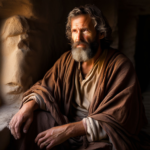

Jesus, Fully God and Fully Man
By: Mike Wallace with Brian Franks
“Behold, the virgin shall be with child, and bear a Son, and they shall call His name Immanuel,” which is translated, “God with us.” (Matt. 1:23 [NKJV])
The gift of God’s grace is that He left heaven, from the side of the Father and took on the frailty of humanity in a real way. He was fully God and fully man. He was both Davidic in lineage and Divine at one time. This can be a difficult concept to understand. How can one be “fully God” and “fully man” at the same time? “But Jesus looked at them and said to them, “With men this is impossible, but with God all things are possible.” (Matt. 19:26 [NKJV]). It is possible for God to be 100% human and 100% God and for it to equal one person. There is God the Father and Jesus Christ, and the Bible says they are one. “Hear, O Israel: The Lord our God, the Lord is one!” (Deut. 6:4).
Jesus was both fully God and fully man while He lived and walked through Judea.
“And the Word became flesh and dwelt among us, and we beheld His glory, the glory as of the only begotten of the Father, full of grace and truth.” (John 1:14). John bases his entire gospel on God becoming flesh and that His glory was still beheld. John 1:1-4,14 show us Jesus was God. As we shall soon see, the fact that He was both fully God and fully man does not damage the wholeness if we wanted to argue for something else, the option then is to somehow claim his emptying of himself made him less divine than 100% but that introduces the idea that someone could be partially divine, which is Greek mythology, not a Christian theology. Hebrews, in the first chapters, argues Jesus’ superiority to angels because he is the son and divine, it never argues he is partly divine. Jesus is divine in every way the father is divine.
The genealogy of Jesus makes it quite clear who He was. Luke gives this astonishing genealogy in Luke 3 and in verse 38 we read, “…the son of Enosh, the son of Seth, the son of Adam, the son of God.” Jesus was the creator, the son of God and the son of man. The apostle John, writing some 60 plus years after Jesus was crucified starts his gospel by showing that Jesus was and is God. “In the beginning was the Word, and the Word was with God, and the Word was God. 2 He was in the beginning with God. 3 All things were made through Him, and without Him nothing was made that was made. 4 In Him was life, and the life was the light of men.” (John 1:1-4). Continuing in verse 14, “And the Word became flesh and dwelt among us, and we beheld His glory, the glory as of the only begotten of the Father, full of grace and truth.” John recognized the God/man aspect of the life of Jesus. He was full of glory, which is something only God can have.
Paul is explicit about the divinity of Jesus and calls other views to be philosophy, empty deceit and the tradition of men. “For in Him dwells all the fullness of the Godhead bodily; and you are complete in Him, who is the head of all principality and power. (Col. 2:8 and 9). Paul cannot be any more explicit about Christ when he says, “all the fullness of the Godhead bodily.” Here, Paul disembowels the future Arianism controversy (c 300 A.D.) where Arius asserts Jesus was not co-existent with the Father. If Arius had truly read verse eight, he would have seen his own flaw in his theology.
When Jesus returned to the upper room, Thomas was able to put his hands and fingers into the wounds of the resurrected Jesus. As the resurrected God, Jesus also had His physical body. “Then He said to Thomas, “Reach your finger here, and look at My hands; and reach your hand here, and put it into My side. Do not be unbelieving but believing.” 28 And Thomas answered and said to Him, “My Lord and my God!” (John 20:27-28). Thomas beheld Jesus as both God and man and by thrusting his fingers into His physical body, he then believed.
These three verses John 1:14, Col. 2:9 and John 20:27-28 show Jesus was both divine and physical at the same time. We cannot ignore when Paul says, “For in Him dwells all the fullness of the Godhead bodily;”
“When Jesus came into the region of Caesarea Philippi, He asked His disciples, saying, “Who do men say that I, the Son of Man, am?”14 So they said, “Some say John the Baptist, some Elijah, and others Jeremiah or one of the prophets.” 15 He said to them, “But who do you say that I am?” 16 Simon Peter answered and said, “You are the Christ, the Son of the living God.” 17 Jesus answered and said to him, “Blessed are you, Simon Bar-Jonah, for flesh and blood has not revealed this to you, but My Father who is in heaven.” (Matt. 16:13-17). This account shows Peter admitting to Jesus that Jesus was God in the flesh as he answered, “You are Christ, the Son of the living God.” He was the living Messiah the Jewish nation had been praying and hoping for. “His divinity also was recognized.”[1] To call Jesus “Son of God” is to ascribe to him all the attributes of divinity. This was such a serious phrase that when Jesus claimed God as his father, it was considered blasphemy, because it did not mean Jesus thought of God like a father, it meant God was his father in a real sense and from his father Jesus was also divine.
We understand Jesus to have come in the flesh for our salvation, willing to die for all mankind. He was willing to give up His life as the eternal God for His family to live on. Even the demons recognized who He was. “Now there was a man in their synagogue with an unclean spirit. And he cried out, 24 saying, “Let us alone! What have we to do with You, Jesus of Nazareth? Did You come to destroy us? I know who You are—the Holy One of God!” (Mark 1:23-24). For the demon to recognize Him, he had to know who He was. He was the great “I am” of Exodus. He was the creator of all things. He was God in the flesh, and they recognized exactly who He was. The Scribes (and Pharisees by inference), who should have been able to recognize who He was, could not. “And some of the scribes were sitting there and reasoning in their hearts, 7 “Why does this Man speak blasphemies like this? Who can forgive sins but God alone?” (Mark 2:6-7). Jesus could and He did forgive sins as only God could do.
The Church of God (Seventh Day) statement of beliefs says, “Jesus Christ is God’s one and only begotten Son. As begotten, not created, He shares the nature, names, and attributes of God with the Father. As Son, not Father, Jesus is subordinate to His Father in rank. From eternity, the Son was with the Father, shared the Father’s glory as the pre-incarnate Word, and with Him created and sustains all things. Jesus the Christ (Messiah) was born of the Virgin Mary by the power of the Holy Spirit, thus uniting two natures- human and divine. Jesus lived without sin, died as an atoning sacrifice for sin, was entombed for three days and three nights, was resurrected bodily, and ascended to His Father to serve as mediator and high priest. He reigns as Lord in heaven and will return to earth as judge and king. Now it pleases the Father that the Son be preeminent in all things and receives our worship.”[2]
What was it like for Jesus to divest Himself of His former glory and become human?
“Let this mind be in you, which was also in Christ Jesus, 6 who, being in the form of God, did not consider it robbery to be equal with God, 7 but made Himself of no reputation, taking the form of a bondservant, and coming in the likeness of men. 8 And being found in appearance as a man, He humbled Himself and became obedient to the point of death, even the death of the cross. 9 Therefore God also has highly exalted Him and given Him the name which is above every name, 10 that at the name of Jesus every knee should bow, of those in heaven, and of those on earth, and of those under the earth, 11 and that every tongue should confess that Jesus Christ is Lord, to the glory of God the Father.” (Phil. 2:5-11). Jesus lowered (divested) Himself lower than the angels and became physically human, subject to death, but He remained a part of the Godhead, thus as Paul said, He was “equal with God.” A mere human cannot be equal with God. But a man who was both fully man and fully God could be. He came as the “form of a bondservant”. “Form” in Greek is morphe, meaning “outward appearance; nature, character.” (Strong’s # 3444). The Pulpit Commentary states, “As to be in the form of a servant implies that he was a servant, so to be in the form of God implies that he was God. The emphatic thought is that he was in the form of God before he was in the form of a servant.”[3] Far from saying Jesus was no longer God, these verses confirm He was God in the flesh.
The book of Hebrews gives us all we need to know that Jesus was God, had been God, was God and will always be God. “God, who at various times and in various ways spoke in time past to the fathers by the prophets, 2 has in these last days spoken to us by His Son, whom He has appointed heir of all things, through whom also He made the worlds; 3 who being the brightness of His glory and the express image of His person, and upholding all things by the word of His power, when He had by Himself purged our sins, sat down at the right hand of the Majesty on high, 4 having become so much better than the angels, as He has by inheritance obtained a more excellent name than they.” (Heb. 1:1-4). Jesus has always been. He made the world and the universe. He is the creator of all. He is the sustainer of the universe to the very end of time and space. He is all powerful. Jesus is the “express image of His person [God], meaning He was God in the flesh. He is, was and always will be God, even as a human, He maintained who He was but had divested Himself of His power but not of His understanding and remembrance of who He truly was. Jesus limited aspects of His preexistent deity during His incarnation but He was still fully divine. He was still He was both Davidic and divine at the same time.
Let us not forget, the disciples were not able to cast out the demon from the little boy in Mark 9:17-29 v. 25-26. Remember, even the demons knew who he was and obeyed Him. The demons would not and did not obey the disciples. In Mark 9 Jesus confirmed His overwhelming power, authority and Godship when He personally ordered the demon out of the little child and the demon obeyed because he knew Jesus was God in the flesh.
“But Christ came as High Priest of the good things to come, with the greater and more perfect tabernacle not made with hands, that is, not of this creation. 12 Not with the blood of goats and calves, but with His own blood He entered the Most Holy Place once for all, having obtained eternal redemption. 13 For if the blood of bulls and goats and the ashes of a heifer, sprinkling the unclean, sanctifies for the purifying of the flesh, 14 how much more shall the blood of Christ, who through the eternal Spirit offered Himself without spot to God, cleanse your conscience from dead works to serve the living God? 15 And for this reason He is the Mediator of the new covenant, by means of death, for the redemption of the transgressions under the first covenant, that those who are called may receive the promise of the eternal inheritance.” (Heb. 9:11-15). The importance of these verses cannot be overstated. No physical sacrifice of a bull or goat can cleanse mankind from sin. Only God through the eternal Spirit can cleanse and remove sin of mankind. Jesus had to be God in the flesh, or we could not be saved as no man could be worthy to redeem us from the grip of death.
Continuing in Phil 2:5-8, vs 7. The Berean Bible says, “but emptied Himself, taking the form of a servant, being made in human likeness.” Continuing in the Pulpit Commentary, “’He emptied Himself.’ Of what? He did not cease to be what he was, but he emptied himself in becoming another; he became man while he was God; a servant while he was LORD of all.”[4]
We take another look at these verses of Phil 2:5-8. “We take the sense of the passage to be, that Christ, while divine in His proper nature, did not, when the call came to serve others, hold fast in self-assertion His God-like state, but divested Himself of this by assuming a servant’s form (adding to His divine a human being, which eclipsed the Godhead in Him) and leading an earthly life such as ours (vv.6,7a).[5]
We see that Jesus was both fully human and fully divine while on earth. He emptied Himself of His power and like a human had to rely totally on faith in God the Father. He came as our example of humble service by offering Himself to be subject to the cross on our behalf.
Jesus’s nature and identity shows “divine names are used in reference both to the Father and the Son.”[6] Isaiah 40:3 God is called “Yahweh.” This same term is used for Jesus in Mark 1:2,3; Luke 3:4-6. Jesus (Yahweh) is the creator in Gen. 1:1; 2:4. Jesus is the creator in John 1:1; Col. 1:6 and Heb. 1:2,10. There are many instances where the God of the Old Testament (Jesus) is equated with Jesus in the New Testament.[7] “Thus we see that New Testament writers and believers refer to Jesus as LORD with the same reverence and preeminence that they gave to the LORD (Yahweh) of the Old Testament.”[8]
Jesus shares the prerogatives of God. “What only God can do Jesus did!”[9] What did He share with God? He was creator and only God can create something from nothing. (John 1:3; I Cor. 8:6; Eph. 3:9; Col 1:16; Heb. 1:2). Only God saves and forgives sins; Jesus did the same. (Mark 2:5-7, 10; Luke 2:10,11; Acts 4:12). Only God receives worship and prayers. Jesus received both. (Matt. 4:10; Matt. 2:11; 8:2; 14:33; 28:9, 16, 17; John 9:38; Rev. 5:13). Only God sees the secrets of men; Jesus did as well. (John 2:25; Matt. 9:4; Mark 12:15; John 6:15, 64). God controls the elements; so, did Jesus. (Col. 1:16,17; Heb. 1:3; Matt. 4:23; Mark 1:27; 4:39, 41). God has life in Himself; so, does Christ. (John 11:25; 5:21, 28,29). God is king and judge, and so is Christ. (John 5:22,27).[10]
God identified Himself as the great “I am” to Moses (Ex. 3:2-4,13-14). And God said to Moses, “I AM WHO I AM.” And He said, “Thus you shall say to the children of Israel, ‘I AM has sent me to you.’” (Exodus 3:2-4, 13-14 [NKJV]).
The God of the Old Testament who spoke to Moses was Jesus Christ. The apostle John makes this point very clear in his gospel. Jesus revealed Himself seven different ways in the book of John as the same great “I Am” of Exodus.
-John 6:35 “I am the bread of life.”
-John 8:12; 9:5 “I am the light of the world.”
-John 10:7-9 “I am the gate”.
-John 10:11-14 “I am the good shepherd”.
-John 11:25 “I am the resurrection and the life.”
-John 14:6 “I am the way, the truth, and the life.”
-John 15:1-5 “I am the true vine.”
Jesus could only call Himself “I am” if He truly were God in the flesh, otherwise it would have been blasphemy. For good measure, Paul places Jesus as being present in the Exodus as well, affirming Jesus’ pre-existence in I Corinthians 10:1-4.
Jesus came as the great “I am” who identified Himself to Moses as God. Moses foretold a time when God would come to this earth. “The Lord your God will raise up for you a Prophet like me from your midst, from your brethren. Him you shall hear, 16 according to all you desired of the Lord your God in Horeb in the day of the assembly, saying, ‘Let me not hear again the voice of the Lord my God, nor let me see this great fire anymore, lest I die.’17 “And the Lord said to me: ‘What they have spoken is good. 18 I will raise up for them a Prophet like you from among their brethren, and will put My words in His mouth, and He shall speak to them all that I command Him. 19 And it shall be that whoever will not hear My words, which He speaks in My name, I will require it of him.” (Deut. 18:15-19). Even Moses knew God was coming to live as flesh in this evil world.
Jesus said, He is “the way, the truth and the life.” (John 14:6). His arrival as a human was from outside of time, matter and space. He physically entered the very creation He had made to save mankind and to give eternal life. John continues with this concept of God becoming flesh and gives a warning to those who do not believe. “By this you know the Spirit of God: Every spirit that confesses that Jesus Christ has come in the flesh is of God, and every spirit that does not confess that Jesus Christ has come in the flesh is not of God. And this is the spirit of the Antichrist, which you have heard was coming, and is now already in the world.” (I John 4:2-3). “For many deceivers have gone out into the world who do not confess Jesus Christ as coming in the flesh. This is a deceiver and an antichrist.” (II John 1:7).
It is the doctrine of the Church of God that Jesus was fully divine and fully human at the same time. Only the blood of a sinless human is worthy of removing the sin of all humanity. Only Jesus in His physical incarnation remained sinless, all others sin. (Rom. 3:23; I Kings 8:46) God, the creator was and is worthy to remove the sin of mankind. If Jesus was not God in the flesh, then His death was in vain and we are doomed to eternal death.
Can we say the same as Thomas? Jesus, our LORD and our God, both divine and human in one body. 100% divine! 100% Human equals Jesus, God in the flesh. We must be like believing Thomas and say, “My Lord and my God” because with God, “all things are possible” (Matt. 19:26).
ADDENDUM: Jesus was the son of man; therefore, He was a man. Jesus was the Son of God; therefore, He was God.
[1] H.D.M. Spence and Joseph S. Exell, editors, The Pulpit Commentary, (Grand Rapids: Wm. B. Eerdmans Publishing Company,1958), Vol. 15, Matthew Chapter 16, p. 161.
[2] Calvin Burrell, This We Believe: Teachings of the Church of God (Seventh Day), (Denver: Bible Advocate Press, 2012), 17.
[3] Pulpit Commentary, vol. 20, Phil. 2:5-8, p. 72.
[4] Pulpit Commentary, vol. 20, Phil. 2:5-8, p. 72.
[5] J.R. Dummelow, M.A., editor, A Commentary on the Holy Bible: By Various Writers, (New York: The Macmillan Company, 1952), 973.
[6] Burrell, 18.
[7] Burrell, 18-19.
[8] Burrell, 19.
[9] Burrell, 20.
[10] Burrell, 20-21 (paraphrased).